


Table of Contents
- Why Airtight Containers Matter for Pet Food Storage
- How to Store Dry Dog Food Correctly
- Benefits of Airtight Pet Food Containers
- Essential Features to Look For
- Pet Food Storage Bin with Wheels
- Preventing Pest Infestations and Maintaining Freshness
- Cleaning and Long-Term Care
- Frequently Asked Questions
Last Updated: August 31, 2026
Why Airtight Containers Matter for Pet Food Storage
Without proper storage, kibble deteriorates rapidly. Moisture creeps in, oxidation breaks down nutrients, and pests find an easy food source. An airtight container for pet food solves all three problems at once, which is why they've become essential for any pet owner serious about their animal's health. The difference between a mediocre container and a reliable one comes down to specific design features: the type of gasket, the locking mechanism, and the material itself.
At Quanolo, we've helped thousands of households upgrade their pet care routines with practical storage solutions. The containers we offer directly impact how long your pet's food stays fresh and how effectively you prevent common storage problems like pest infestations and nutrient loss.
How to Store Dry Dog Food Correctly
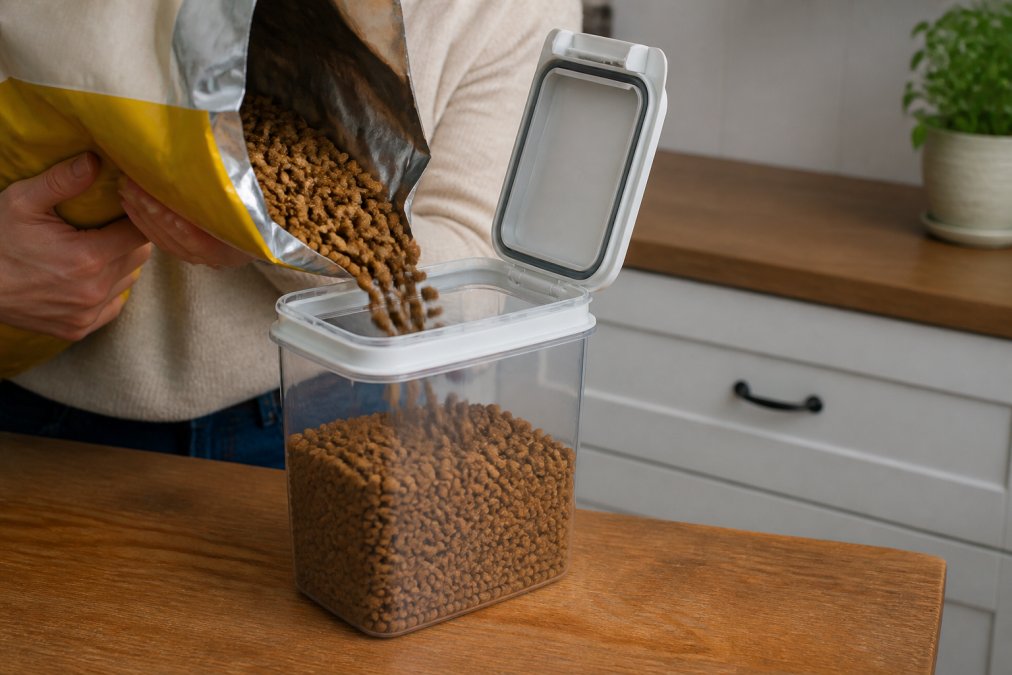
Storing dry dog food correctly begins with understanding that kibble is vulnerable the moment you open a bag. Transfer kibble into a food-grade, moisture-proof container immediately after opening, then seal it tightly.
Pour kibble from the original bag into your container, ensuring you fill it to a level that allows the lid to close fully without forcing it. Leave a small air gap at the top to prevent the lid from warping. Once sealed, store the container in a cool, dry place away from direct sunlight.
Don't store the container directly on concrete floors, especially in basements or garages, concrete wicks moisture that can seep into even well-sealed containers. Use a shelf, pallet, or raised surface instead. If storing multiple bags worth of kibble, rotate your stock using a "first in, first out" system to ensure older food gets used before it loses nutritional value.
Temperature matters significantly. Kibble stored in warm environments breaks down faster. Ideal storage temperature is between 15-21°C (AAFCO guidance on product handling safety). Avoid areas near heating vents, radiators, or direct sunlight, as these accelerate oxidation and cause rancidity.
Benefits of Airtight Pet Food Containers
Freshness preservation is the primary benefit. Kibble exposed to air begins oxidising immediately. Fats turn rancid, vitamins degrade, and the food loses palatability. An airtight seal extends the effective shelf life by weeks or months, which matters especially if you buy larger quantities to save money.
Pest prevention is equally important. Rodents, insects, and other pests are attracted by smell. A sealed container eliminates odour leakage, making your food storage invisible to potential invaders. Unlike cardboard bags or loosely covered bins, a truly airtight container denies pests both access and the scent cues they use to locate food.
Moisture control prevents kibble from absorbing humidity, which leads to clumping, mold growth, and bacterial development. Food-grade airtight containers with proper gaskets maintain a dry internal environment. This is especially critical in damp climates or during winter months.
Space efficiency becomes relevant when storing food for multiple pets or large dogs. Airtight containers stack neatly and take up less space than open bags.
Odour containment prevents pet food smell from permeating your kitchen or storage areas, improving daily living comfort in smaller homes or apartments.
Essential Features to Look For
Not all containers claiming to be airtight perform equally. Understanding what features deliver genuine protection helps you choose wisely.
Seal Quality and Moisture Protection
The seal is everything. Look for containers with a multi-point locking system rather than a simple clip-down lid. Multi-point locks ensure even pressure across the entire seal, preventing air gaps.
Silicone gaskets are superior to rubber because they maintain flexibility over time and resist degradation from temperature changes. Some premium containers use dual gaskets for redundancy.
Test the seal before committing. Press down firmly on the lid and listen for a distinct "pop" sound when you release it. This indicates negative pressure inside the container, confirming a proper seal.
Moisture-proof construction extends beyond the seal. Container walls should be thick enough to prevent condensation from penetrating. Food-grade plastic with a minimum thickness of 3-4mm provides better moisture resistance.
Material Safety and Food-Grade Standards
Your pet's food will be in direct contact with the container material for weeks or months. The material must be food-safe and free from harmful chemicals.
Food-grade plastic is the standard for pet food containers. Look for polypropylene (PP) or other food-approved plastics. Avoid containers made from recycled plastic or unclear material sources.
BPA-free certification is important. Bisphenol A can leach into food, particularly when exposed to temperature changes (peer-reviewed research on BPA leaching). Reputable manufacturers clearly state BPA-free status.
Stainless steel containers offer an alternative to plastic. They're durable, don't absorb odours, and are completely inert. The downside is weight and cost, though they last longer and are ideal for maximum durability.
Check for certifications from relevant food safety standards. In the UK, containers should meet food contact regulations.
Size, Capacity, and Accessibility
Container size should match your pet's consumption rate and your storage space. Calculate your pet's weekly consumption and choose a container that holds 2-4 weeks of food. For a medium dog eating 500g daily, that's roughly 3.5-7kg capacity.
Accessibility features matter. A scoop included with the container saves time and prevents contamination. An ergonomic handle makes moving the container easier. Some containers have wheels, which is invaluable if you're storing heavy amounts of food.
The lid design affects usability. Flip-top lids are convenient for daily feeding but require careful handling to maintain the seal. Locking lids with handles are more secure but slightly slower to open.
Transparency is useful but not essential. A clear container lets you see when food is running low, but light can penetrate and accelerate oxidation. If you choose a clear container, store it in a dark location.
Pet Food Storage Bin with Wheels
A wheeled pet food storage bin represents a practical upgrade for households storing larger quantities of food or for owners with mobility considerations. The wheels transform the container from a static storage item into a mobile solution.
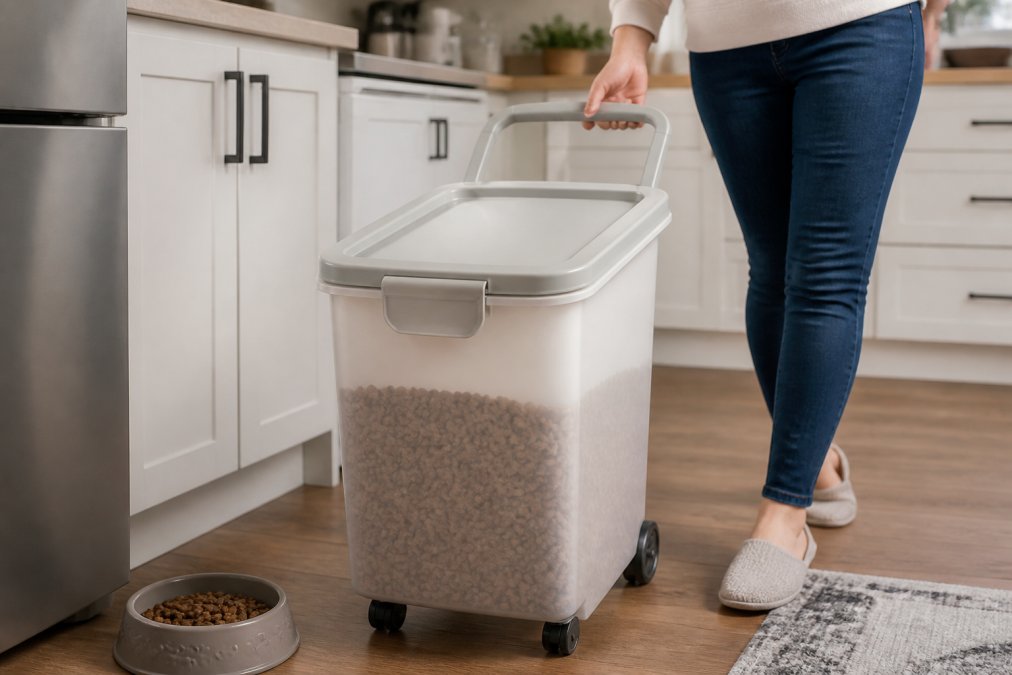
The primary advantage is convenience. Moving a 20-30 litre container full of kibble is physically demanding without wheels. A wheeled bin can be rolled from storage to the feeding area, reducing strain and making the task faster.
Wheeled bins typically feature locking wheels, which prevents unintended movement when stationary. Ensure the locking mechanism is reliable and easy to engage with one hand.
An ergonomic handle positioned at the correct height makes pushing or pulling the bin comfortable. Some designs include a handle that doubles as a lid lock, combining two functions into one.
Stability is critical. A wheeled bin should have a low centre of gravity and a wide base to prevent tipping when rolling over uneven surfaces. A 30-litre bin filled with kibble weighs approximately 12-15kg, so ensure the wheels are rated for this weight and the frame is reinforced.
For households with multiple pets or owners who prefer buying food in bulk, a wheeled bin is a worthwhile investment.
Preventing Pest Infestations and Maintaining Freshness
Pest infestations are one of the most serious consequences of poor food storage. Rodents are attracted by smell and can chew through plastic bags within hours. An airtight container eliminates the scent signal that draws them in.
Insects, particularly weevils, moths, and beetles, lay eggs in dry food, and larvae consume the kibble from inside. Airtight containers prevent insects from accessing the food. If you suspect contamination in a new bag before opening it, inspect it carefully.
Moisture control directly supports freshness maintenance. High humidity causes kibble to absorb water, promoting bacterial and mold growth. A properly sealed container maintains low internal humidity. In damp climates, consider adding a food-safe desiccant packet inside the container.
Temperature stability also preserves freshness. Fluctuating temperatures cause condensation inside containers, introducing moisture and promoting degradation. Store your container in a location with consistent temperature.
Rotation is essential when storing multiple containers. Label each with the purchase date and use older stock first. A "first in, first out" system ensures you're always feeding your pet the freshest available food.
Cleaning and Long-Term Care
Proper maintenance of your airtight container extends its lifespan and ensures it continues protecting your pet's food effectively.
Clean the container thoroughly every time you refill it. Empty remaining kibble, wipe the interior with a dry cloth, and inspect the seal and gasket for wear or damage. Wash with warm soapy water, rinse thoroughly, and dry completely before refilling.
The gasket requires special attention. Inspect it carefully for cracks, brittleness, or discolouration. A damaged gasket compromises the seal and should be replaced. Many manufacturers sell replacement gaskets separately.
The locking mechanism should be checked regularly. Ensure clips or locks engage smoothly and hold firmly. Test the seal after each cleaning by pressing down and listening for the characteristic "pop" sound when released.
Store the container in a location where it won't be knocked over or damaged. If you notice cracks or warping, the container should be replaced.
For long-term storage of the container itself, ensure it's completely dry and clean before sealing. Store it in a cool, dry place away from direct sunlight.
Most high-quality airtight containers last 5-10 years with proper care. As containers age, gaskets degrade and plastic becomes more brittle. If your container shows difficulty sealing, visible wear on the gasket, or cracks, it's time to replace it.
Keeping your pet's food fresh and safe requires more than just closing a bag. An airtight container designed specifically for pet food storage addresses the three main threats to kibble quality: oxidation, moisture, and pest access. Quanolo's range of pet food storage solutions combines food-grade materials, reliable sealing mechanisms, and practical features like wheels and ergonomic handles to simplify this essential task. Whether you're storing food for a single cat or multiple large dogs, selecting a container with genuine airtight performance and maintaining it properly ensures your pet receives nutritious, fresh meals every day. Explore Quanolo's collection to find the storage solution that matches your household's needs and budget.
Frequently Asked Questions
What is the best material for storing pet food safely?
Food-grade polypropylene and stainless steel are the safest choices for pet food storage. Both materials are BPA-free and designed to prevent chemical leaching into kibble. Polypropylene is lightweight and affordable, while stainless steel offers superior durability and odour-proof properties. Avoid containers with unknown plastic types, as they may contain harmful substances. Always check that containers meet food-safety standards before use.
Do pet food containers need to be airtight?
Yes, airtight containers are essential for maintaining kibble freshness and preventing oxidation, which degrades nutritional value over time. An airtight seal also protects against moisture absorption and pest infestations. Non-airtight storage allows oxygen exposure, which can cause rancidity and nutrient loss within weeks. For maximum shelf life and food safety, choose containers with secure locking mechanisms or vacuum-seal technology.
How do I keep my dog's food fresh for longer?
Store dry pet food in an airtight, moisture-proof container away from direct sunlight and heat sources. Keep the original bag inside the container for added protection, as it contains important nutritional information and preservatives. Maintain consistent cool temperatures, ideally between 10-15°C. Use a scoop to portion kibble rather than reaching into the container with hands, which introduces moisture and contaminants. Check expiration dates and rotate stock regularly.
How do I prevent pests from getting into pet food?
Airtight containers with secure lid locking mechanisms are your first line of defence against pest infestations. Choose containers with spill-proof seals that eliminate odour leakage, which attracts rodents and insects. Store containers off the floor on shelves when possible, and keep the storage area clean and dry. Regularly inspect containers for damage, and transfer any opened bags into sealed storage within hours of opening to prevent pest access.