


Table of Contents
- Why Pet Food Storage Matters for Odor Control
- How to Store Dry Pet Food to Maintain Freshness
- Preventing Pests in Pet Food Storage
- Odour Neutralization and Humidity Control
- Cleaning, Maintenance, and Seal Integrity
- Space-Saving Storage Solutions for Small Homes
- Frequently Asked Questions
Last Updated: September 2, 2026
Why Pet Food Storage Matters for Odor Control
Pet food spoilage isn't just an unpleasant smell, it's a sign that your storage method is failing. When kibble sits exposed to air, moisture, and temperature fluctuations, oxidation begins immediately, breaking down nutrients and releasing the compounds that make your home smell like a pet shop. The best pet food storage for odors stops this process cold by creating an environment where freshness is preserved and odours never develop in the first place.
At Quanolo, we understand that pet owners juggle competing priorities: keeping food fresh, managing space in small homes, protecting against pests, and maintaining a home that doesn't smell like a kennel. The right storage container solves all four problems at once. An airtight seal isn't just about freshness, it's about creating a barrier that locks in kibble's original state and locks out the moisture and air that trigger decomposition.
Most pet owners reach for whatever container is cheapest or most convenient. The result? Food that loses nutritional value within weeks, odours that seep into adjoining rooms, and pests that find their way inside. This guide covers the science behind odour prevention, the container materials that actually work, and the maintenance habits that keep seals effective long-term.
How to Store Dry Pet Food to Maintain Freshness
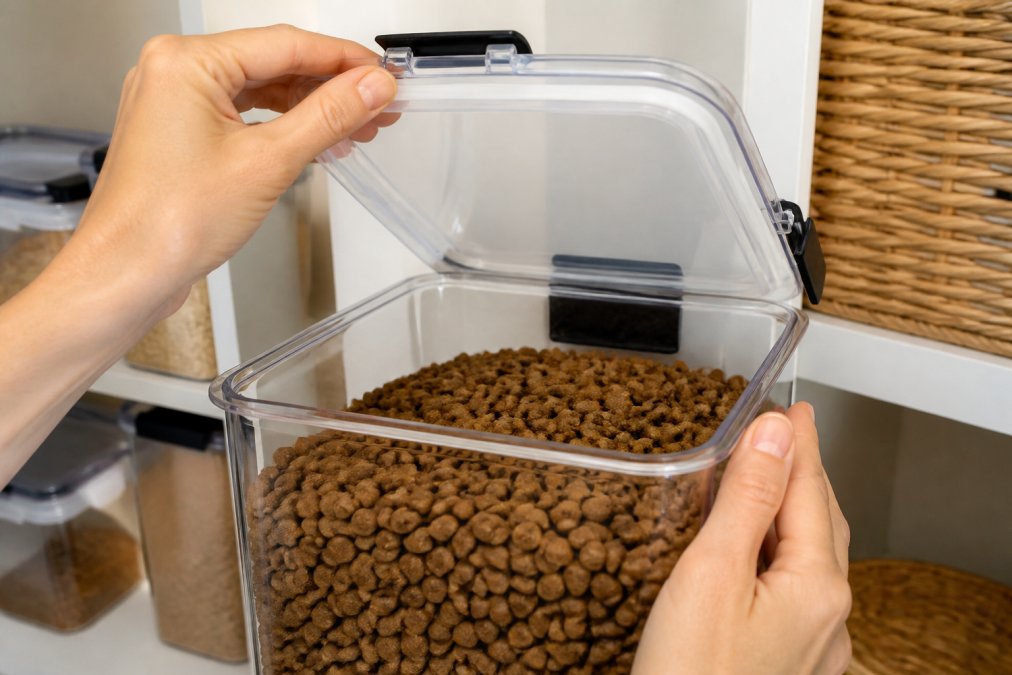
Storing dry pet food properly begins with understanding what destroys freshness: oxygen exposure, humidity, and temperature swings. An airtight container with a food-grade seal stops all three. The moment you open a bag of kibble, oxidation starts. Fats in the food begin to break down, releasing volatile organic compounds that create odour. A proper seal halts this process by eliminating air exchange.
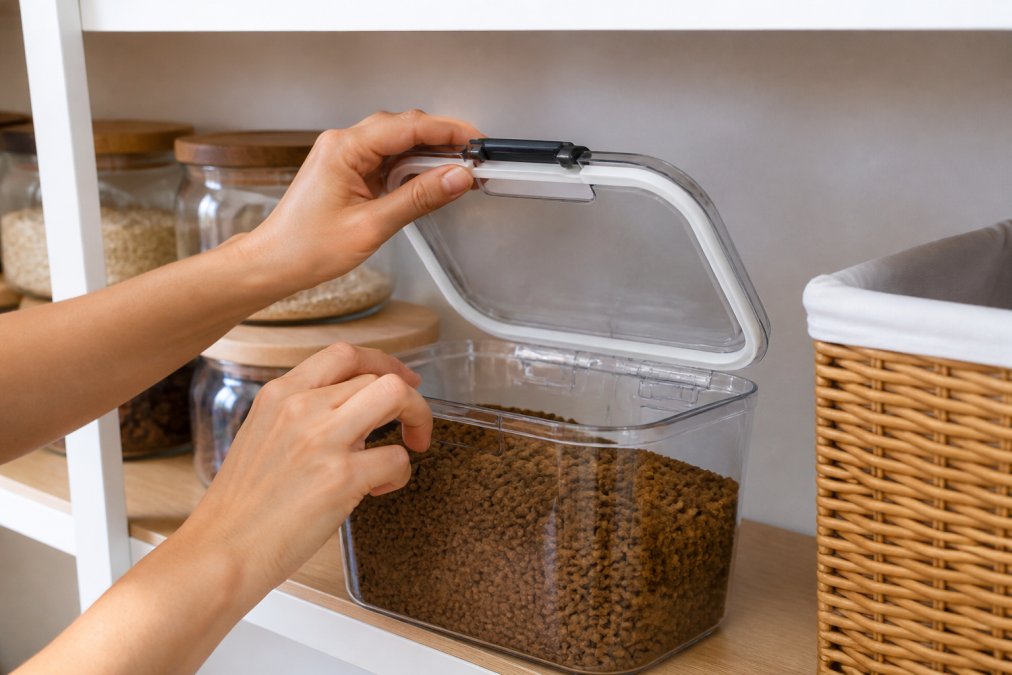
The container itself matters less than the seal integrity. Many pet owners assume any plastic tub with a snap-on lid will work. It won't. Snap-fit lids create gaps that allow air to seep in over time. Gasket-sealed containers, those with a rubber or silicone ring pressed between the lid and body, create a far tighter barrier. When you close the lid, the gasket compresses, forcing air out and preventing new air from entering.
Food-grade containers are non-negotiable. Standard plastic can leach chemicals into food, particularly when exposed to heat or stored long-term. Look for containers marked as food-grade or BPA-free. Stainless steel offers an alternative that's more durable and completely inert, though it costs more upfront.
Storage location amplifies or undermines your container's effectiveness. Keep pet food in a cool, dry place, ideally between 10-21°C. Heat accelerates oxidation. Humidity encourages mould growth and accelerates odour development. Avoid storing food near windows, radiators, or kitchens where cooking heat and steam penetrate. A pantry shelf, utility room, or garage (if climate-controlled) works well. Small apartments benefit from under-bed storage containers or stacked airtight tubs that fit into corners.
Airtight Seals and Gasket Systems
The gasket seal is where container quality separates from marketing hype. A silicone-seal design compresses when you close the lid, creating a vacuum-tight environment. Over time, gaskets degrade, they crack, shrink, or lose elasticity. Once this happens, the container no longer provides effective odour control. Replace gaskets annually or whenever you notice the seal no longer feels snug.
Test your seal by closing the container and trying to open the lid without unsealing it first. If it opens easily, the gasket isn't creating sufficient pressure. A proper seal requires a deliberate twist or lift to break. Many pet owners ignore this detail, wondering why their "airtight" container still smells after a month.
Locking mechanisms matter too. Clips or latches that hold the lid down under pressure reinforce the gasket seal. They prevent the lid from shifting during storage or transport, which can break the seal and allow air infiltration. Containers without locking mechanisms rely entirely on gasket compression, which weakens over time.
Material Comparison: Plastic vs. Stainless Steel
Polypropylene plastic dominates the pet food storage market because it's affordable and lightweight. It's food-grade when manufactured to proper standards and doesn't react with kibble or moisture. The downside: plastic degrades under UV light and heat. Stored near a sunny window or warm garage, plastic containers can warp, crack, or become brittle within a year or two.
Stainless steel containers cost 2-3 times more but last indefinitely. Steel doesn't degrade, won't crack from temperature swings, and provides superior odour containment. The non-porous surface prevents odours from absorbing into the material itself, a problem with plastic over time. If you're storing pet food long-term or in a humid environment, stainless steel justifies the premium.
The practical choice depends on your situation. Renters or those in small apartments benefit from plastic's portability and lower cost. Homeowners storing large quantities or dealing with persistent odour issues should invest in stainless steel. A hybrid approach works too: use plastic for daily-access containers and stainless steel for backup storage.
Preventing Pests in Pet Food Storage
Rodents and insects can detect kibble through cardboard, thin plastic, and even some sealed containers if the seal isn't truly airtight. Airtight storage eliminates the odour trail that pests follow. A food-grade, gasket-sealed container prevents rodents from accessing food and stops insects from laying eggs inside.
Elevation matters as much as the container itself. Store pet food off the floor on shelves or in cupboards. Rodents are less likely to investigate elevated food sources. Keep containers away from walls and dark corners where pests hide. In kitchens or pantries, position containers in the centre of shelves where they're visible and accessible to you, not pests.
Inspect containers monthly for signs of pest activity: small droppings, chewed plastic, or insects inside. If you notice any, transfer the remaining food to a fresh container immediately. Don't rely on the original bag, transfer kibble from opened bags into airtight containers within days of opening. Bags are designed for shelf display, not long-term freshness or pest prevention.
For homes with persistent pest problems, consider storing pet food in a separate sealed container inside a larger sealed container, a redundant barrier that makes access nearly impossible. This approach sounds excessive until you've dealt with an infestation.
Odour Neutralization and Humidity Control
Odour doesn't originate from kibble alone, it emerges from the chemical reaction between food and moisture in the air. When humidity levels rise above 60%, bacterial colonies begin to proliferate on kibble surfaces (peer-reviewed research on bacterial growth in pet food). These bacteria break down fats and proteins in the food, releasing volatile organic compounds (VOCs) that create the characteristic stale, rancid smell associated with spoiled pet food. This process accelerates dramatically in warm conditions: a sealed container stored at 21°C with 70% humidity will develop noticeable odours within 2-3 weeks, whereas the same food at 10°C and 40% humidity can remain fresh for 8-12 weeks.
A truly airtight container prevents humidity from entering, but understanding your storage environment adds another critical layer of protection. Relative humidity (RH) below 50% is ideal for pet food longevity. In damp climates or during humid seasons, monitor the air around your storage area. If your pantry or storage cupboard feels noticeably damp, or if you notice condensation on windows nearby, humidity is likely above safe levels.
Silica gel packets or moisture-absorbing packs placed inside the container capture excess humidity before it can trigger bacterial growth. These packets work by absorbing water vapour from the air inside the sealed space, maintaining RH below 40% even in humid environments. Replace packets monthly or whenever they feel saturated (they'll change colour if they're the indicator type). For a 15-litre container, a single standard silica packet is sufficient; larger containers benefit from two packets placed at opposite ends.
Some pet owners use food-grade oxygen absorbers, which remove oxygen from the sealed space, virtually stopping oxidation and bacterial growth simultaneously. Oxygen absorbers work by chemically binding oxygen molecules, creating an inert atmosphere inside the container. This approach is exceptionally effective for long-term storage (6+ months) but is overkill for food consumed within 4-6 weeks. If you use oxygen absorbers, ensure your container is genuinely airtight, a weak seal will allow new oxygen to enter as the absorber depletes, rendering it ineffective.
Temperature stability matters more than most people realise because fluctuations cause condensation inside containers. When a sealed container stored in a cold garage warms up during the day, the air inside expands and moisture condenses on the kibble surface and container walls. This introduces the exact moisture that triggers bacterial growth and odour development. In unheated garages, sheds, or outdoor storage areas, this problem worsens significantly. If you must store food in a variable-temperature space, allow the container to reach room temperature before opening it, and consider storing smaller quantities (5-10 litres) in your main living space where temperature remains stable year-round.
Odour absorption inside the container is a secondary strategy that works only after odours have already formed. Some containers feature built-in activated charcoal filters or carbon liners that neutralise existing odours by trapping VOCs. These features help reduce smell but don't replace airtight seals or humidity control. A properly sealed container with stable humidity prevents odours from developing in the first place, making absorption features a backup rather than a primary solution. If your container already smells despite being sealed, a charcoal filter can help, but the root cause, humidity infiltration or temperature fluctuation, must be addressed to prevent recurrence.

Cleaning, Maintenance, and Seal Integrity
A clean container is a fresh container. Residual kibble dust and oils left behind accelerate odour development and attract pests. Empty and wash your container every time you refill it, don't just top it up with fresh food. Use warm soapy water and dry thoroughly before refilling. Any moisture left inside compromises your seal's effectiveness.
Pay special attention to the gasket during cleaning. Food particles and oils accumulate in the seal's crevices, degrading its effectiveness over time. Use a soft brush or cloth to clean the gasket thoroughly. If the gasket becomes permanently discoloured or smells even after washing, replace it. Most manufacturers sell replacement gaskets separately.
Inspect the lid and container body for cracks or warping monthly. Plastic containers can warp if exposed to heat or filled with warm food. Allow food to cool to room temperature before storing. Cracks, even tiny ones, compromise the seal and allow air infiltration. A cracked container should be replaced immediately.
The locking mechanism requires attention too. Clips or latches can loosen over time, reducing the pressure holding the lid down. Ensure they're engaged firmly every time you close the container. If a clip breaks or won't hold tension, the container's effectiveness drops significantly.
Space-Saving Storage Solutions for Small Homes
Small apartments demand creative storage. Stackable airtight containers let you store multiple pet foods or larger quantities in minimal floor space. Look for containers designed to nest when empty, reducing clutter when not in use. Vertical stacking in a cupboard or pantry corner works better than spreading containers across multiple shelves.
Under-bed storage containers offer hidden capacity without eating into living space. Pet food stays out of sight, protected from light and temperature swings. The trade-off: you'll need to plan ahead and refill more frequently since access is less convenient than a pantry shelf.
Drawer-style containers that slide into existing cupboards maximise wasted vertical space. These work particularly well in kitchens where every inch counts. A single drawer can hold 2-3 weeks' worth of kibble for a medium-sized dog.
For renters concerned about permanent fixtures, freestanding shelving units with airtight containers offer flexibility. You can take the entire setup when you move. Quanolo's range includes compact storage solutions designed for apartments, containers that prioritise vertical storage and minimal footprint without sacrificing seal quality.
Consider your pet's feeding schedule when choosing container size. Smaller containers (5-10 litres) suit apartments and encourage more frequent refilling, which keeps food fresher. Larger containers (20+ litres) work for homes with space and pets that consume kibble quickly. The sweet spot for most households is a 10-15 litre container that balances freshness with convenience.
The difference between pet food that stays fresh and kibble that develops odours comes down to one factor: seal integrity. Everything else, material choice, container size, storage location, maintenance, supports that single goal. An airtight container with a food-grade gasket, stored in a cool dry place and cleaned regularly, eliminates odour problems entirely.
Quanolo offers a curated selection of innovative pet food storage solutions designed to simplify daily routines and improve home comfort. Our containers prioritise accessible, high-quality design, airtight seals that actually work, materials that last, and sizes that fit real living spaces. With 29,000+ households served and a 4.8/5 average customer rating, our pet storage products solve the odour problem that standard containers leave unsolved. Shop now and transform how you store pet food.
Frequently Asked Questions
Q: Do airtight containers actually keep pet food fresher for longer?
A: Yes. Airtight containers with proper gasket seals prevent oxidation, which degrades kibble nutrients and causes rancid odors. A tight locking mechanism stops moisture and air from entering, maintaining freshness for weeks longer than open bags. Check the seal integrity monthly by pressing the lid; it should feel resistant and create an audible click when locked.
Q: What is the best way to prevent pests in pet food storage?
A: Use food-grade, non-porous containers with secure locking latches that pests cannot penetrate. Store containers on elevated shelves away from walls, and keep the area clean of spilled kibble. Airtight seals eliminate odor trails that attract rodents and insects. Clean containers every two weeks and inspect for any cracks or gaps in the seal that could compromise pest resistance.
Q: How can I get rid of dog food smells in my house?
A: Store kibble in airtight, food-grade containers to eliminate odor at the source. Place containers in cool, dry areas away from direct sunlight and heat, which accelerate spoilage and odor. If odor persists in your pantry, place an open box of baking soda nearby to absorb stale smells. Vacuum up spilled kibble immediately and sanitize storage areas monthly with a pet-safe cleaner.
Q: Are plastic or metal containers better for preventing pet food odours?
A: Stainless steel containers offer superior odor containment because the non-porous material doesn't absorb smells over time, unlike plastic which can retain odors permanently. High-quality food-grade polypropylene plastic works well if it has a strong silicone-seal gasket. Stainless steel lasts longer and resists degradation from moisture and humidity, making it ideal for long-term storage and odor prevention.
Q: How often should I clean my pet food storage container?
A: Clean containers every two to four weeks, or whenever you refill them. Empty the container completely, wipe the interior with a dry cloth to remove kibble dust, then wash with warm soapy water and dry thoroughly before refilling. Pay special attention to the gasket and locking mechanism, where dust and moisture accumulate. Sanitize the exterior monthly to prevent odor buildup on the container itself.