


Table of Contents
- The Core Home Maintenance Tools Every Household Needs
- Basic DIY Tool Kit for Beginners: Budget vs. Pro Tier
- Best Tools for Fixing a Leaky Tap and Common Plumbing Jobs
- Tool Safety and Ergonomics: Avoiding Common Injuries
- How to Maintain Household Tools So They Last for Years
- Space-Saving Storage for Small Homes and Apartments
- Home Maintenance Tools That Do More Than One Job
- Conclusion
Last Updated: August 28, 2026
Most households muddle through minor repairs with whatever comes to hand: a butter knife standing in for a flathead, a shoe heel substituting for a hammer. It works once. It rarely works twice, and it often makes the job worse. At Quanolo, we've put together this guide to the essential tools for minor home maintenance so that whether you own your home or rent it, you have exactly what you need to handle the jobs that come up every week without calling a tradesperson or making do.
A capable home toolkit doesn't require much space or a large budget. Below, we'll show you exactly which tools earn their place, how to choose between budget and pro-tier options, and how to keep everything working for years.
The Core Home Maintenance Tools Every Household Needs
A solid homeowner toolkit starts with hand tools that cover the widest range of household repairs.
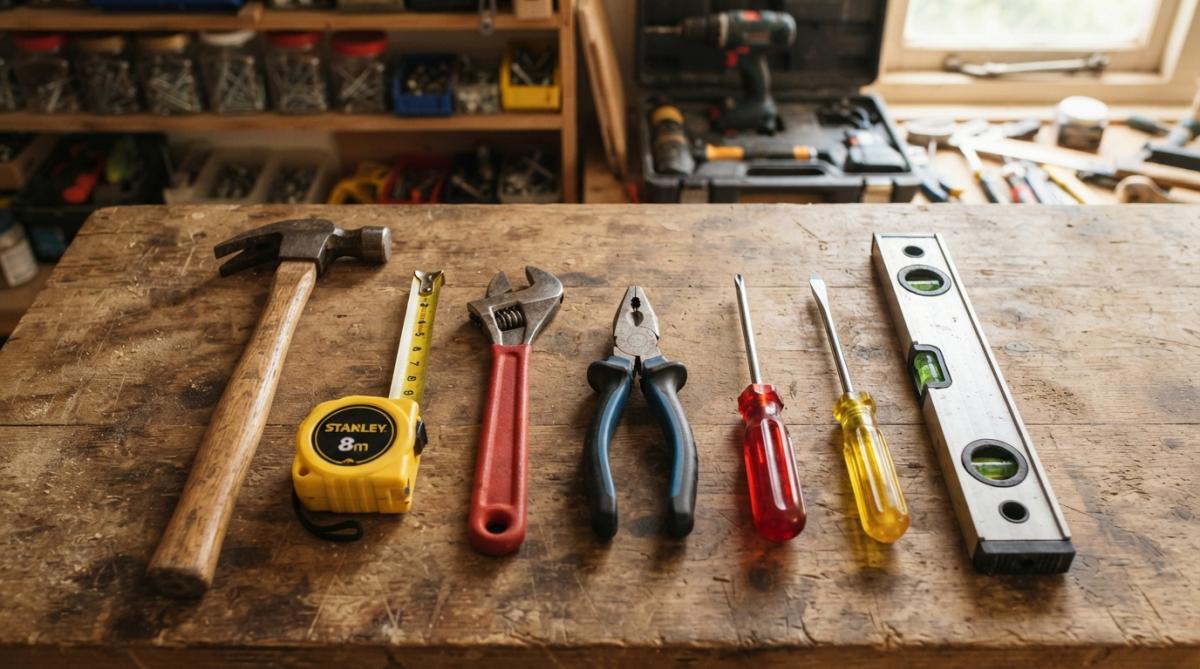
Claw Hammer
The claw hammer is the single most-used tool in home repair. One face drives nails; the curved claw pulls them out and levers apart timber. For general home maintenance, a 450g to 570g head gives enough force without tiring your wrist. Fibreglass or rubber-grip handles absorb vibration better than plain wood.
The AllHammer™ 16-in-1 Multi-Tool (£44.95) replaces the standalone hammer with a compact stainless steel multi-tool that also includes pliers, a knife, screwdrivers, a wire stripper, and an emergency window-breaking head, making it ideal for renters who need versatility without bulk.
Screwdriver Set (Phillips and Flathead)
No single tool gets used more often in household repairs than a screwdriver. Flathead handles slotted screws and doubles as a pry tool; Phillips handles the cross-head screws found on virtually every flat-pack, appliance panel, and light fitting. Invest in chrome-vanadium steel bits from the start to avoid stripping.
The ToolNest™ 31-in-1 Precision Screwdriver Kit (£54.00) covers 28 precision bits in CRV and S2 steel with magnetised tips and an extended bit for deep-set screws, handling everything from eyeglasses to standard household fasteners in one compact magnetic case.
Adjustable Wrench
A quality adjustable wrench is the backbone of any plumbing or fastening job around the house. Check maximum jaw opening: 30mm covers most domestic plumbing fittings; 50mm handles larger pipe fittings and radiator valves.
The RatchetMaster™ 360° Adjustable Wrench (£27.99) adds a pivoting head that reaches angles a standard wrench cannot, adjusts from 8mm to 32mm, and includes a ratcheting action that saves time on repetitive wrenching.

Tape Measure
A 5-metre tape measure covers almost every home improvement task from hanging pictures to fitting shelves. Look for a blade with a standout of at least 1.5 metres and a locking mechanism that holds firmly.
Utility Knife
A utility knife with replaceable blades handles cutting tasks that scissors and kitchen knives can't: trimming carpet, scoring plasterboard, opening packaging. Snap-off blade models are most practical because you always have a sharp edge available.
Pliers (Needle-Nose and Serrated)
Two pairs cover almost every gripping task. Needle-nose pliers reach into tight spaces, bend wire, and hold small fasteners in place. Serrated-jaw pliers provide a wider, stronger grip for larger work: pulling nails, gripping pipes, or holding a bolt steady while you tighten a nut. Buy a pair with insulated handles if there's any chance you'll be working near electrical fittings.
Cordless Power Drill
A cordless drill transforms home repair basics. It drives screws far faster than any manual screwdriver and bores holes for fixings, cable runs, and shelf brackets. For general home use, an 18V lithium-ion model with a clutch gives enough torque for most tasks without overdriving screws.
The ProCraft™ Multifunctional Electric Screwdriver Set (£89.99) offers a compact cordless design that also functions as a manual screwdriver when the battery runs flat.

Spirit Level
Wonky shelves and crooked picture rails are the most visible signs of a rushed DIY job. A 600mm spirit level handles shelves and door frames; a shorter 250mm version fits in tighter spaces. Traditional bubble levels are more durable than digital versions and require no batteries.
Basic DIY Tool Kit for Beginners: Budget vs. Pro Tier
The biggest mistake first-time buyers make is buying either too cheap or too comprehensive.
| Tier | Approximate Spend | What You Get | Best For |
|---|---|---|---|
| Budget starter | Under £100 | Hammer, basic screwdrivers, tape measure, utility knife | Renters, light repairs |
| Mid-range | £100-£250 | Above plus cordless drill, adjustable wrench, pliers | First-time homeowners |
| Pro-tier | £250+ | Full set with multi-tools, precision bits, power drill | Regular DIY, older properties |
Budget Starter Kit (Under £100)
A practical basic DIY tool kit for beginners doesn't need to cost much. Prioritise a 450g claw hammer, a basic Phillips and flathead screwdriver set, a 5-metre tape measure, a utility knife, and a spirit level. The AllHammer™ 16-in-1 Multi-Tool at £44.95 consolidates several items into one, freeing budget for a decent tape measure and level.
Mid-Range and Pro-Tier Upgrades Worth the Investment
The jump from budget to mid-range is mostly about precision and durability. A cordless drill, a quality adjustable wrench, and a precision screwdriver set like the ToolNest™ 31-in-1 kit (£54.00) add meaningful capability without redundancy. Pro-tier is for households with older properties, where non-standard fittings and more frequent maintenance tasks justify specialist bits and higher-torque tools.
Best Tools for Fixing a Leaky Tap and Common Plumbing Jobs
The best tools for fixing a leaky tap are an adjustable wrench, slip-joint pliers, and a flathead screwdriver.
Here's the practical sequence for a basic tap repair:
- Turn off the water supply at the isolation valve under the sink or at the mains stopcock.
- Use a flathead screwdriver to remove the tap handle cover and unscrew the handle.
- Apply an adjustable wrench to loosen the packing nut beneath the handle.
- Remove the old washer or ceramic cartridge with pliers.
- Fit the replacement washer or cartridge, reassemble in reverse order, and restore the water supply.
For minor leaks around pipe joints, Quanolo's Waterproof Home Sealant (£29.00) provides a fast spray-on seal that stops drips without tools or contractor visits. The Sealant™ Fast Setting Waterproof Putty (£29.95) is mouldable by hand, sets in approximately 10 minutes, and can be painted once cured.

According to guidance from the Chartered Institute of Plumbing and Heating Engineering, the most common causes of domestic tap failure are worn washers and degraded cartridges, both straightforward DIY repairs with the right tools.
Tool Safety and Ergonomics: Avoiding Common Injuries
Most tool injuries happen during the first five minutes of a job, before the user has fully settled into a safe working posture. The most frequent hand tool injuries are cuts from utility knives, bruised fingers from misdirected hammer blows, and wrist strain from using an incorrectly sized wrench.
Practical safety rules that prevent injuries:
- Always cut away from your body with a utility knife.
- Keep your non-dominant hand clear of the hammer's striking path.
- Use the right size wrench jaw for the fastener to avoid rounding off bolt heads.
- Wear safety glasses when drilling into masonry.
- Secure the workpiece before drilling.
Ergonomics matters significantly. Tools with ergonomic grip handles reduce fatigue over a long job. The RatchetMaster™ includes a non-slip grip designed for oily or wet conditions.
According to data published by the Health and Safety Executive, DIY-related injuries account for a significant proportion of home accident admissions each year, with hand and wrist injuries the most prevalent category. Most are preventable with basic precautions.
How to Maintain Household Tools So They Last for Years
The real cost of cheap tools isn't the purchase price: it's the replacement cost when they fail after 18 months. Good maintenance extends tool life dramatically.
Cleaning and Rust Prevention
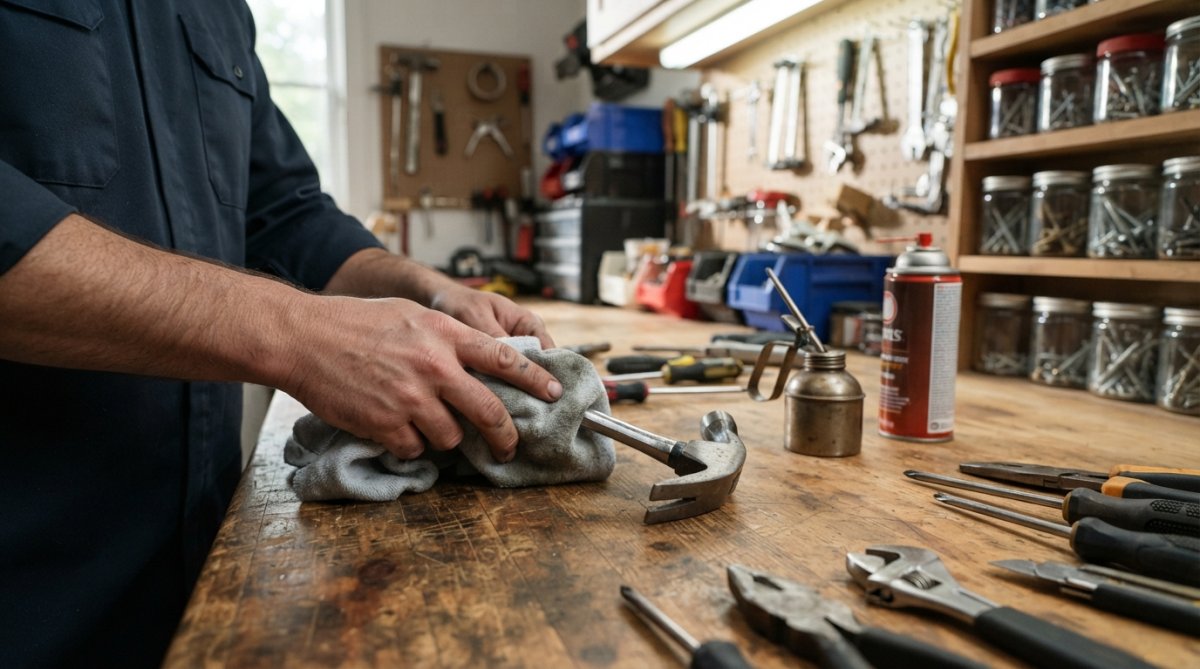
Wipe metal surfaces with a dry cloth after every use. Moisture is the primary cause of rust on hand tools. For tools already showing surface rust, a light application of penetrating oil followed by scrubbing with fine wire wool removes it without damaging the underlying metal.
Store tools in a dry location. A wall-mounted rack or a closed toolbox with a silica gel sachet inside keeps humidity low.
Sharpening and Lubrication
Utility knife blades should be replaced rather than sharpened: snap-off blades make this trivial and cheap. Drill bits benefit from occasional sharpening with a bit sharpener or a fine diamond file.
Adjustable wrenches and pliers need occasional lubrication at the adjustment mechanism. A drop of light machine oil on the worm gear of a wrench keeps the jaw moving smoothly and prevents stiff, imprecise adjustment.
Space-Saving Storage for Small Homes and Apartments
A full toolbox works well in a house with a garage. It's impractical in a one-bedroom flat.
The most space-efficient approach for small homes is a three-tier system:
- Daily access tools (tape measure, multi-tool, utility knife): kept in a kitchen drawer or a small wall-mounted holder near the front door.
- Weekly-use tools (screwdriver set, pliers, wrench): stored in a compact zip pouch or a slim fabric tool roll that hangs on the back of a cupboard door.
- Occasional-use tools (cordless drill, spirit level): stored in their cases under a bed, on a high shelf, or in a wardrobe.
Multi-tools earn their place in small spaces precisely because they collapse multiple functions into one object. The AllHammer™ 16-in-1 fits in a bag and replaces what would otherwise be six separate items. The ToolNest™ 31-in-1 kit stores 28 bits in a case roughly the size of a large pen.
For renters specifically: a tool roll hung inside a wardrobe door takes up almost no space and keeps everything accessible without requiring any wall fixings.
Home Maintenance Tools That Do More Than One Job
For a professional workshop, specialised tools are correct. For a home toolkit covering essential tools for minor home maintenance, multi-function tools are the smarter choice.
The best multi-tools don't compromise on any single function to achieve versatility.
| Tool | Primary Function | Secondary Uses | Best For |
|---|---|---|---|
| AllHammer™ 16-in-1 | Hammering, driving | Pliers, knife, wire stripping | Renters, small flats |
| ToolNest™ 31-in-1 | Precision screwdriving | Electronics, eyeglasses, appliances | Tech-heavy households |
| RatchetMaster™ | Adjustable wrenching | Tight-angle bolts, plumbing | Plumbing and automotive tasks |
| UniWrench™ | Dual-ended wrenching | Metric and imperial fasteners | Older properties |
| ProCraft™ Electric Screwdriver | Powered fastening | Manual screwdriving | Regular flat-pack assembly |
The Which? guide to home tool kits notes that most households use fewer than eight tools regularly, which makes a strong case for prioritising versatility over volume in any starter kit.
A practical rule: if a tool only does one thing and you'd use that one thing fewer than five times a year, it probably doesn't belong in a small home toolkit. Rent it or borrow it instead.
Quanolo has helped over 29,000 households simplify their home upkeep with practical, well-designed tools rated 4.8 out of 5 by verified buyers. The essential tools for minor home maintenance covered in this guide are all available at Quanolo, from multi-tools that replace an entire drawer of hand tools to precision screwdriver kits and adjustable wrenches built for everyday home repair basics. If you're building a basic DIY tool kit for beginners or upgrading what you already have, browse the full repair range at Quanolo and get exactly what you need, nothing more.
Frequently Asked Questions
What are the 10 essential tools every homeowner should have?
A solid homeowner toolkit covers: a claw hammer, a Phillips and flathead screwdriver set, an adjustable wrench, a tape measure, a spirit level, a utility knife, needle-nose and serrated pliers, a cordless drill, and a waterproof sealant. These hand tools handle the vast majority of household repairs, from hanging shelves and tightening fasteners to cutting, measuring, and levelling. Multi-tools that combine several functions are worth considering if storage space is limited.
What are the best tools for fixing a leaky tap?
Fixing a leaky tap typically requires an adjustable wrench or spanner to remove the tap body, a set of flathead and Phillips screwdrivers to access internal components, and needle-nose pliers for gripping small parts. A waterproof sealant is also useful for sealing around the tap base once reassembled. The Quanolo UniWrench™ (£29.97) and RatchetMaster™ (£27.99) are both well-suited to this job, as they adjust to fit different tap fittings without needing a full spanner set.
How should I store home maintenance tools to prevent rust?
Keep tools in a dry, ventilated space away from damp walls. Wipe metal surfaces with a lightly oiled cloth after each use to create a thin protective barrier. Silica gel packets inside a toolbox absorb moisture effectively. Wall-mounted pegboards or magnetic strips keep tools off damp floors and improve airflow around them. For renters with limited space, a compact roll-up tool bag hung on a hook achieves the same result without taking up drawer or shelf space.
Is a basic DIY tool kit useful for renters who can't do major repairs?
Yes. Most tenancy agreements allow minor maintenance such as replacing light fittings, tightening loose hinges, hanging pictures, and sealing draughty windows. A compact starter kit with a screwdriver set, hammer, tape measure, and sealant covers almost everything a renter can legally tackle without landlord approval. Multi-tools like the AllHammer™ 16-in-1 (£44.95) are especially practical for renters because they replace several individual tools without taking up much storage space.
What is the difference between budget and pro-tier home repair tools?
Budget hand tools (typically under £15 per piece) use lower-grade steel and simpler handles. They work fine for occasional household repairs but wear faster under regular use. Pro-tier tools use hardened steel alloys, ergonomic grips, and tighter manufacturing tolerances, which matters most for precision tasks like drilling, levelling, or applying consistent torque. For most homeowners, a mid-range starter kit covering the basics is the practical choice, with targeted upgrades for tools used most frequently.
How do I maintain screwdrivers and other hand tools to extend their lifespan?
Clean screwdriver tips and metal surfaces after use to remove grime and moisture. Check tips regularly for wear; a rounded Phillips tip slips and damages screw heads. Store screwdrivers handle-up in a holder rather than loose in a drawer where tips knock against other hardware. For wrenches and pliers, apply a drop of light machine oil to pivot points every few months to keep the action smooth. Avoid leaving any steel tool wet, as surface rust forms quickly and reduces grip and precision.