


Table of Contents
- Why Organized Pet Supplies Make Life Easier
- Pet Storage Ideas for Small Spaces: Make Every Corner Count
- Best Pet Food Storage Containers for Freshness
- How to Store Dog Leads and Collars Without the Tangle
- Toy Rotation and Grooming Supplies: A System That Works
- Crate, Bedding, and Outdoor Gear: Zoned Storage Solutions
- Seasonal Rotation and Senior Pet Safety Tips
- Conclusion: Build Your Pet Hub One Step at a Time
- Frequently Asked Questions
Last Updated: September 6, 2026
Why Organized Pet Supplies Make Life Easier
Most pet owners don't have a clutter problem; they have a systems problem. Food bags tear open, leads tangle, and toys migrate, creating daily friction: you can't find the brush before a walk, you buy duplicates, and your hallway looks like a pet shop exploded.
Organizing pet supplies assigns every item a dedicated home so retrieval is effortless. Done well, it saves minutes daily, reduces waste, and calms your space. This Quanolo guide covers smart ways to organize pet supplies for real British homes, from compact flats to family houses.
We'll cover food storage, lead management, toy rotation, grooming stations, seasonal adjustments, and small-space solutions most guides overlook.
Pet Storage Ideas for Small Spaces: Make Every Corner Count
Small homes demand vertical thinking. Use wall space and multi-purpose furniture rather than bulky units. The best small-space pet storage combines three principles: hang what you can, stack what you can't, and hide the rest.
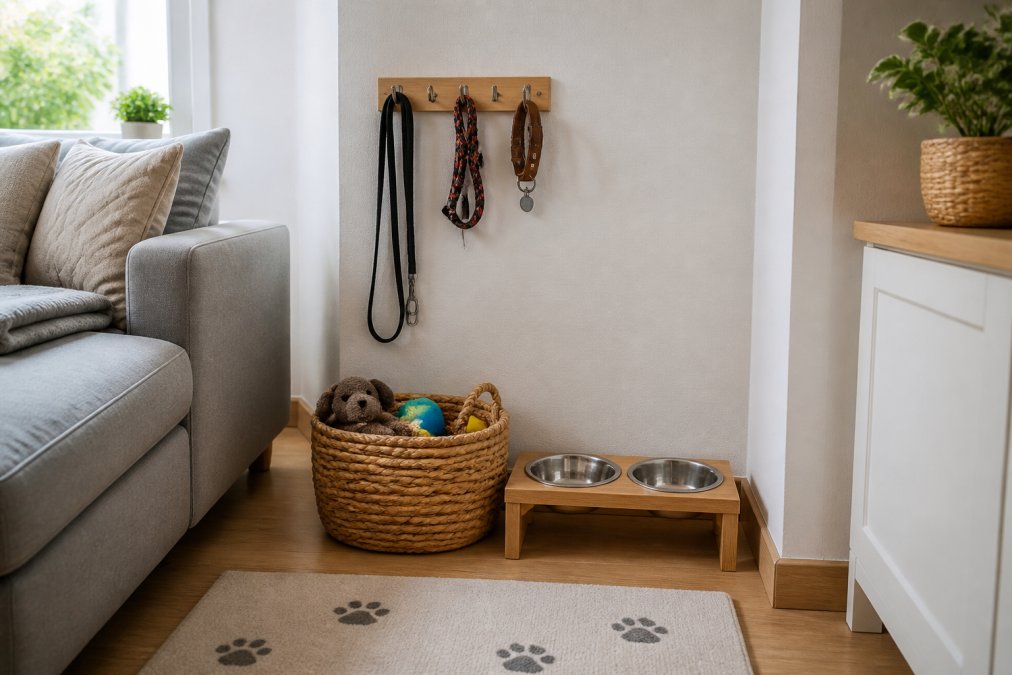
Entryway Hooks and Baskets for Daily Essentials
The entryway is where pet chaos starts. Install a row of sturdy hooks at a reachable height, assign one hook per lead, and add a wall-mounted basket for poop bags, treats, and paw wipes.
Avoid hanging leads by their clips, which tangle. Loop the lead over the hook so the clip hangs free, and label hooks by name for multi-dog households.
Vertical Shelving and Hidden Storage Furniture
When floor space is scarce, go up. Floating shelves above the feeding station hold food containers and grooming tools; a slim over-door organiser works for brushes, combs, and nail clippers.
Hidden storage furniture earns its keep in small flats. An ottoman or bench with internal storage holds outdoor gear and travel bowls while doubling as seating. Choose pieces that match your decor so they blend in.
Best Pet Food Storage Containers for Freshness
Food storage protects nutritional value and prevents waste. Kibble stays freshest in an airtight container that blocks moisture, light, and pests. The right choice depends on your feeding routine, pet's size, and storage location.
Material Trade-Offs: Plastic, Stainless Steel, and Ceramic
Food-grade polypropylene plastic is lightweight, shatterproof, and inexpensive, a 10-litre container costs £8-£15. Look for recycling code 5 and BPA-free labels. It can absorb odours over time and become brittle in cold garages.
Stainless steel is the premium choice at £25-£45 for 10 litres. It is non-porous and chew-proof, but you cannot see the food level and it can dent. Brands like Trixie and Ferplast offer steel bins with rubber gaskets.
Ceramic containers with tight lids cost £20-£35. They resist knocking over and are dishwasher-safe, but can chip, so inspect them regularly.
Sizing: Match the Container to Your Feeding Cycle
Match the container to how quickly your pet eats. A 10 kg bag needs a 12-15 litre container; a 15 kg sack needs a 20-litre container or a second smaller one for daily use, with the bulk bag sealed in a cool cupboard.
An oversized container traps excess air, accelerating oxidation of fats. The ideal is a container the food bag fills to at least 80% capacity.
Airtight Mechanisms: What Actually Works
Airtightness depends on the lid. Look for a silicone gasket around the entire rim, not a snap-on lid. Test by lifting the container by the lid alone. Locking latches on both sides are more reliable than a single central clip.
Portioning Systems: Scoops, Pumps, and Dispensers
For multiple pets or strict schedules, a portioning system removes guesswork. A 250 ml stainless steel scoop costs £3-£6. Gravity-fed dispensers like the PetSafe Healthy Pet Simply Feed automate portions but cost £80-£120 and need regular cleaning. A container with a built-in scoop well is a middle option.
Pest Prevention: Beyond the Container
An airtight container stops pests, but it does not stop them from reaching the container. Store food off the floor, on a shelf or in a cupboard, to deter mice and ants. If you live in a flat with a shared bin area, check the container weekly for signs of pantry moths, which can enter through tiny gaps in the lid. RSPCA guidance on pet food storage advises keeping dried food in a cool, dry place and checking use-by dates regularly.
Placement: Where the Container Lives Matters
Keep food below 25°C and away from radiators. In garages, winter temperature swings cause condensation. A food-grade silica gel packet absorbs residual moisture and costs pennies to replace monthly.
How to Store Dog Leads and Collars Without the Tangle
The fix for tangles is simple: separate each lead and collar. A hook rack or cup hooks on a door gives every item its own spot; a peg rail keeps collars visible.
A wall-mounted organiser with individual slots prevents knots. In a drawer, use a cutlery-style divider tray and clip each lead's handle to its compartment.
For multiple pets, colour-code: assign each dog a colour for lead, collar, and harness, and match hooks and bowls. Within a week, everyone grabs the right gear without thinking.
Toy Rotation and Grooming Supplies: A System That Works
Toys multiply fast. Toy rotation, keeping a small selection available and swapping every couple of weeks, keeps toys feeling new, reduces clutter, and extends their lifespan.
Designate one basket as the active toy bin and a second for reserve. When rotating, wash incoming toys and discard damaged ones. Grooming supplies deserve their own caddy or drawer near where you groom.
Sort, Donate, and Declutter: A Quick Inventory Routine
Audit pet supplies every three months: empty storage areas, sort into keep/donate/discard piles, wipe containers, check expiry dates, test zips and clips, and retire frayed or loose items.
Donate outgrown items in good condition to a local animal charity. This 30-minute routine prevents the slow creep of clutter.
PDSA advice on pet health and grooming notes that regular grooming is part of responsible pet care, so keeping your tools organised and within reach makes the habit easier to maintain.
Crate, Bedding, and Outdoor Gear: Zoned Storage Solutions
Think of your home as having pet zones. The crate zone holds bedding, a travel bowl, and a spare towel. The outdoor zone stores leads, boots, coats, and the car trunk organiser. The sleeping zone keeps beds accessible but out of high-traffic areas.
A foldable car trunk organizer keeps water bowls, towels, and spare leads from rolling around the boot, and folds flat when not in use. For £34.95 from Quanolo, its multi-compartment heavy-duty Oxford fabric separates muddy gear from clean items.

Wash beds and blankets monthly and keep a spare set. Store off-season bedding in vacuum bags to save space.
Seasonal Rotation and Senior Pet Safety Tips
Seasonal rotation is a twice-yearly system that keeps storage zones from overflowing and ensures the right gear is ready. This section covers a practical routine and the accessibility needs of senior pets.
The Twice-Yearly Rotation Routine
Set reminders for the first weekend of April and October. Each 45-minute rotation follows four steps.
Step 1: Pull everything out. Empty every storage zone and lay items on a clean surface to see what you own.
Step 2: Sort into three piles. Keep (used last season), Store (used opposite season), and Discard (damaged or no longer fits). Be honest, a broken zip or punctured mat won't be fixable by next season.
Step 3: Clean before storing. Wash coats and boots per care labels (most at 30°C). Wipe cooling mats with pet-safe disinfectant and dry completely. Vacuum the car trunk organiser.
Step 4: Store with protection. Use vacuum compression bags for bulky winter gear, a 60-litre bag costs about £6 for three and reduces volume by up to 70%. Add a £1-£2 moisture absorber sachet to prevent mildew. Store cooling mats flat in a breathable cotton bag, not plastic.
Seasonal Gear Checklist
Winter to Summer (April):
- Wash and dry all coats, boots, and fleeces before storing
- Check cooling mats for punctures and clean them
- Swap heavy ceramic bowls for lighter travel bowls if you are heading out more
- Move paw balm and winter-specific grooming tools to a back shelf
- Test the car trunk organiser for the summer trip kit: water bowl, towel, spare lead
Summer to Winter (October):
- Wash and dry cooling mats before storing
- Check coats and boots for fit, puppies grow, and last year's coat may not fit
- Add a high-visibility reflective lead or collar to the entryway hook for darker walks
- Stock up on paw wipes for muddy season
- Move the moisture absorber sachets into the winter gear storage box
Senior Pet Accessibility: Organising for Comfort, Not Just Convenience
For senior pets, organisation shifts from "easy for you" to "easy for them." A pet with arthritis or reduced mobility struggles with storage requiring jumping or bending. The storage design is wrong, not the pet.
Elevated feeding stations. Raised bowls reduce neck strain for dogs with arthritis. A feeder raising the bowl 15-20 cm off the floor helps; adjustable stands like Neater Pets or PetFusion cost £25-£50. For cats, a raised platform at chest height works similarly.
Low-access toy bins. Replace tall baskets with a shallow, wide tray no higher than 15 cm, placed where the pet already frequents, so they don't have to stretch or jump.
Bed placement and design. Low-sided beds (under 10 cm) let pets with joint pain step in easily; cave-style beds retain warmth. Place away from draughts and off cold floors. The CozyNest winter cave bed at £44.95 offers draught-free warmth, while the KittyCove plush bed at £29.95 suits pets who like a semi-open nest.

Ramps and step access. A ramp or pet stairs (£30-£60) prevents jarring jumps that aggravate arthritis. Store it flat against a wall, always in the same spot, so the pet learns the route.
Grooming station accessibility. Senior pets often need more frequent grooming for skin and coat health, but they may not tolerate standing for long. Set up a grooming station at a comfortable height, a table or counter that lets you work without bending, and keep all tools in a caddy that stays on the table. PDSA advice on pet health and grooming notes that regular grooming is part of responsible pet care, so keeping your tools organised and within reach makes the habit easier to maintain.
The Seasonal Transition for Senior Pets
Senior pets feel temperature changes more acutely. In April, bring out lighter bedding a week before packing winter blankets; in October, do the reverse. This gradual transition reduces stress and lets you check fit and function.
Conclusion: Build Your Pet Hub One Step at a Time
You don't need to overhaul your home in a weekend. Start with the single area causing the most daily frustration, tangled leads or a spilling kibble bag, and build out from there.
Quanolo's range of pet storage and care products is built around this incremental approach. From the foldable car trunk organizer at £34.95 to grooming tools like the Pet Hair Removal Gloves at £13.59 and the FreshGroom Pet Comb at £21.95, every item targets a specific household annoyance with practical, functional design trusted by more than 29,000 households.

Frequently Asked Questions
What are some creative storage ideas for pet toys?
Skip the single toy basket and use a system. Keep a small, accessible basket for daily toys, then store the rest in a larger bin or cupboard. Rotate toys weekly to keep your pet interested. For small spaces, use wall-mounted pockets or a hanging organiser on a door. Label each container so everyone in the household knows where things belong and can tidy up without thinking.
What is the best way to store dog leads and harnesses?
Install sturdy hooks at your entryway, at a height you can reach easily. Hang each lead and collar on its own hook so they do not tangle. Place a small tray or shallow bin below for items like poo bags and a spare key. This keeps daily essentials visible and accessible, which makes leaving the house far less stressful.
How can I store pet food to keep it fresh and accessible?
The best pet food storage containers are airtight, food-safe, and large enough to hold an entire bag. Opt for a container with a wide opening so you can scoop easily. Store it in a cool, dry place, away from direct sunlight. If you have a small space, look for a container that fits under a counter or inside a cupboard. Always keep the original bag label for feeding instructions.
How do I create a pet station in a small home?
Choose one corner, cupboard, or entryway and dedicate it to your pet. Use vertical space: wall hooks for leads, a shelf for food containers, and a basket for toys. Look for furniture that hides pet gear, like a storage ottoman or a side table with a bin. Having one central pet hub keeps supplies tidy and stops them from spreading through the whole house.
What should I do with pet supplies I no longer need?
Sort through your pet supplies every few months. Clean and donate items in good condition, such as beds, blankets, and unused toys, to a local animal shelter or rescue. Check food and treats for expired items and throw them away. Grooming tools that are worn out should be replaced. This routine keeps your storage areas functional and prevents clutter from building up.
Get started with Quanolo and turn your pet corner into a calm, organised hub that works for the whole family.